
Mindblow: Guess the Word!
Kidding Box StudioWord
4.51.38K Reviews
- Version
- 2.8.2
- Installs
- 1.00M
- Age Rating
- Everyone
Screenshots
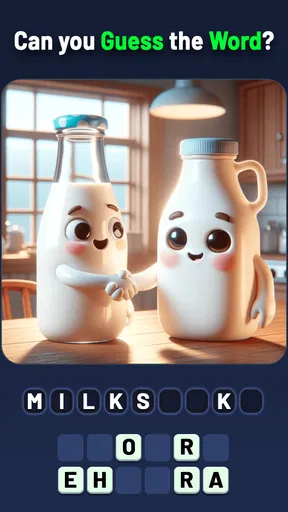
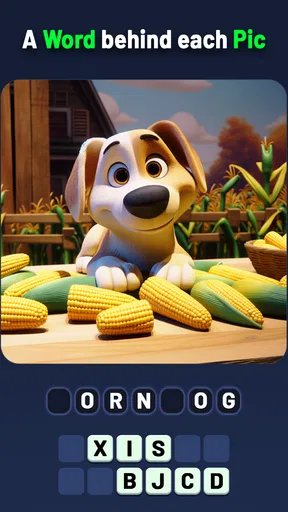
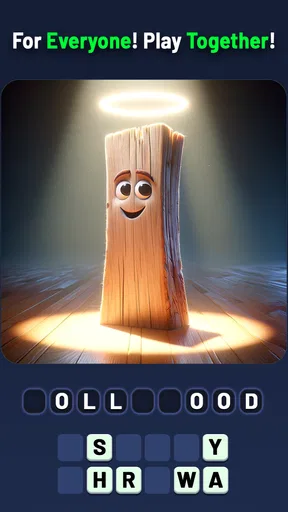
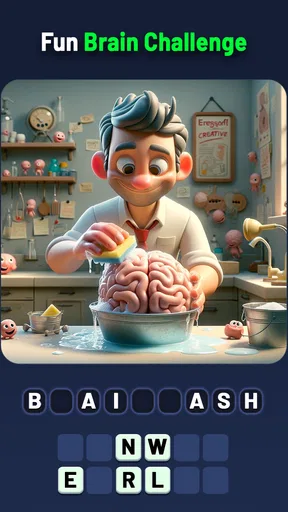
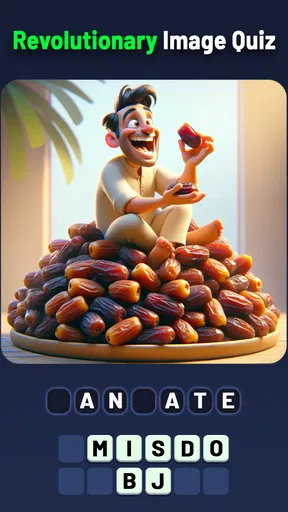
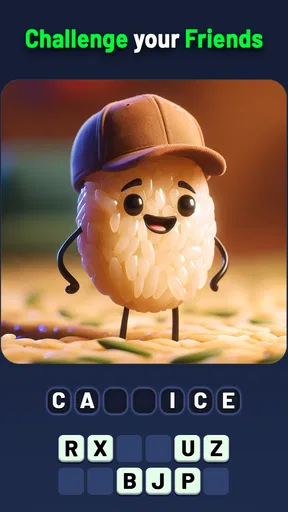
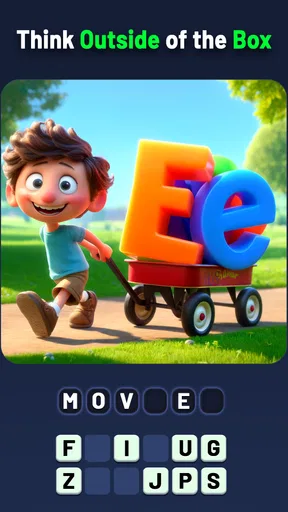
Our Review of Mindblow: Guess the Word!
 Analysis by Appyee
I picked up Mindblow: Guess the Word! expecting a quick picture-and-word diversion, and that is exactly where it works best. This free word game from Kidding Box Studio asks me to look at an image, connect its clues, and uncover the hidden answer. It is easy to understand within moments, but solving a clue still gives me a small sense of discovery rather than feeling like I am simply tapping through a quiz.
The game belongs to the word category, although its visual presentation makes it feel different from a traditional crossword or an ordinary anagram app. Instead of starting with a blank grid or a long definition, I begin with a picture and use association, spelling, and deduction together. That combination gives it a friendly entry point for casual players, families, and anyone who enjoys short mental challenges without wanting a complicated rulebook.
After spending time with it, my overall impression is positive but specific: this is strongest as a lightweight guessing game for spare moments. It is not the right choice if you want deep word strategy, a story campaign, or a highly competitive puzzle system. Its appeal comes from the rhythm of seeing a clue, trying a few possibilities, and moving on when the answer finally clicks.
How the early goals pull you into the first puzzles
The opening experience is built around a very clear objective: identify the word hidden in the image. That simplicity matters. I never had to learn a complex board, remember several kinds of tokens, or understand a lengthy tutorial before playing. The first puzzles establish the central habit quickly: inspect the visual clue, think of related words, and enter the answer.
That early goal is more effective than it may sound because an image can point in several directions at once. A picture might suggest an object, an action, a place, or an idea, so the task is not always a matter of naming whatever appears on screen. I found myself checking the length and shape of the answer, reconsidering the obvious response, and looking for the connection the puzzle was actually trying to make.
This makes each early round feel like a small decision rather than a passive recognition exercise. I usually begin with the most immediate interpretation, then widen my thinking if it does not fit. That is a useful approach for new players: do not stare at the image as if it were a literal label. Treat it as a clue with a theme, and ask what word the picture is trying to evoke.
The short format also gives the game a practical everyday role. I can open it while waiting for an appointment, during a short break, or when I want something more active than scrolling but less demanding than a full game session. It does not require me to remember a plot or return with a complicated plan. The next visual challenge is enough to get started.
For younger players, the Everyone content rating makes the concept approachable, while adults can still enjoy the occasional ambiguity in a clue. I would describe it as family-friendly in spirit, but the best experience depends on the player’s patience with word association. Someone who prefers exact logic may occasionally find a picture-based answer less satisfying than a crossword clue with a precise definition.
What I look for before committing to an answer
One of my most useful habits was separating the visible subject from the intended word. If the picture shows something familiar, I first list a few related terms instead of entering the first one that comes to mind. I then consider common phrases, alternate forms, and whether the image is pointing toward a broader concept. This takes only a few seconds, but it prevents the game from becoming a sequence of random guesses.
I also try to notice the emotional or situational meaning of an image. A picture can communicate an activity or a relationship rather than a single object. That distinction is important in a game like this because the challenge is not simply visual memory. It is the connection between what I see and the language I use to describe it.
These small choices give the early stages more texture than the store summary alone suggests. The game teaches its own solving style through repetition: look carefully, accept that the first answer may be too narrow, and use the available word pattern as part of the clue. That is a modest but worthwhile learning curve.
Progress signals and the feeling of moving forward
Good casual puzzle games need to make progress easy to understand, and Mindblow does that through the basic act of clearing one image after another. Each solved clue is a visible step forward. I do not need a complicated progression chart to know that I am advancing; the completed puzzles themselves provide the feedback.
That approach suits the game’s short-session identity. When I only have a few minutes, I want a clear stopping point. Solving a picture gives me one. When I have more time, the same structure lets me continue without having to prepare for a larger mission. The sequence creates a gentle “one more puzzle” pull without demanding a long uninterrupted session.
The game’s popularity also suggests that this straightforward loop has connected with a broad audience. It has an average rating of 4.5 from around 28 thousand ratings, with roughly 1.4 thousand written reviews and over a million installs. I do not treat those figures as a guarantee that every clue will suit my taste, but they do indicate that the accessible image-guessing format has found a substantial player base.
What I appreciate is that progress is tied to solving rather than to learning a large collection of menus. The reward is primarily cognitive: I see a clue, make the connection, and confirm that I was right. That makes the game easy to revisit because I can remember the method even if I have not opened it for several days.
There is a trade-off here. A player who wants a strong sense of character development, world-building, or strategic growth may find the progress signals too light. The game’s forward movement is about the next answer, not about building an elaborate profile or changing the game world. I see that as a deliberate fit for quick word play, but it limits the long-term motivation for players who need more layers.
Why the simple loop remains useful
The lack of clutter is valuable in an everyday scenario. Imagine sitting on a train with one hand free and only a short ride ahead. A conventional crossword may be awkward to resume, while a larger adventure game may take too much attention. Here, I can solve a single image, stop, and return later without feeling that I abandoned a larger objective.
I also found the game useful as a shared activity. Two people can look at the same picture and suggest different interpretations, which makes the solving process more social than playing alone. That works particularly well when one person notices a visual detail and the other thinks of the wording. It is not a multiplayer feature claim; it is simply a natural way to use a visual word puzzle with someone nearby.
For language learners, the format may offer a gentle vocabulary prompt, especially when the image clearly connects to an everyday word. I would not use it as a complete language course, because guessing context and spelling are not the same as structured instruction. Still, it can encourage players to think about synonyms and common associations in a relaxed way.
Difficulty curve: when pictures stop giving the answer away
The most important part of the difficulty curve is the shift from recognition to interpretation. Early clues can feel immediate because the image offers a familiar route to the answer. Later, the same basic format becomes less automatic when a picture supports several possible words. That is where the game asks for patience rather than speed.
I prefer this kind of difficulty to a sudden increase in obscure vocabulary. The challenge feels more connected to how I read the image. I may know the subject perfectly well and still need to decide which aspect of it matters. This creates a useful pause between seeing and answering, and it rewards players who are willing to test more than one mental association.
My advice is to avoid burning through guesses too quickly. I first describe the image in plain language, then think of related actions, settings, and expressions. If that fails, I reduce the possibilities by considering the expected word’s length and letters. This method is more reliable than repeatedly entering near-synonyms without a plan.
The difficulty is also affected by personal experience. A clue that feels obvious to me may be less familiar to another player, while a culturally common reference may be easy for one age group and less immediate for another. That is an unavoidable feature of picture-based word games. It makes the experience varied, but it can also create moments where success depends on interpretation more than pure vocabulary.
Players who want a perfectly measurable challenge may prefer a conventional crossword, where clue wording and crossing letters provide a more formal structure. Mindblow is better for people who enjoy visual ambiguity and the satisfying leap from an image to a word. The trade-off is that a missed answer may feel less like a logical error and more like failing to guess the designer’s intended connection.
How I handle a stubborn clue
When I am stuck, I stop asking “What is in this picture?” and ask “What does this picture make me think of?” That change often opens a different path. I consider whether the image suggests a verb, a quality, a location, or a familiar phrase. I also try explaining the picture aloud, because spoken descriptions can reveal a word that silent staring does not.
I would not recommend using hints or assistance immediately if the goal is to improve at the game. Giving myself a little time to explore alternative meanings makes the eventual answer more rewarding. On the other hand, if I am playing casually with limited time, moving past a stubborn clue is reasonable. The game works best when the challenge remains enjoyable rather than becoming a test of endurance.
This is one of the non-obvious strengths of the format: it encourages flexible thinking without requiring a notebook or a large vocabulary list. The player learns to treat images as layered prompts. That makes the game more mentally engaging than a simple “name the object” exercise, even though the controls and rules remain approachable.
Retention pressure and the limits of the “one more” rhythm
The game’s retention comes mainly from curiosity. After solving one image, I want to see what kind of clue comes next. The low commitment helps too: because a round can be approached independently, returning later feels effortless. This is a softer form of engagement than a game built around daily obligations or long-term resource management.
That softness is a benefit for me, but it may also be the reason some players stop after a while. If the only goal is to solve the next picture, the motivation can fade once the novelty of the format wears off. I would not choose this as my only game if I needed a deep progression system to keep me invested for weeks or months.
The pacing is most successful when I treat it as a collection of compact mental breaks. I enjoy it more when I play a handful of puzzles, pause, and return later than when I try to force a marathon session. Extended play can make similar visual associations blur together, especially when I am rushing. Short sessions preserve the feeling of discovery.
There is also a practical consideration around the free model. The game is free to download, and in-app purchases range from $1.99 to $99.99 per item. That range is important to keep in mind before spending. I would approach any optional purchase carefully and decide whether it genuinely improves my experience rather than buying simply because I am stuck or impatient.
For me, the best way to avoid spending pressure is to set a personal rule: try a clue thoughtfully, take a break if frustration builds, and only consider assistance when I still want to play rather than when I feel pushed to finish. That preserves the puzzle’s central satisfaction. A word game should reward insight, not make progress feel like something I must purchase in the moment.
The current version is 2.8.2, and the game runs on Android six or later. That makes it accessible to many Android users with older compatible devices, although I still recommend checking the version requirements on the device before installing. The technical threshold is modest, which fits the game’s uncomplicated, pick-up-and-play character.
Who should make room for it, and who should skip it
I would recommend it to casual players who like visual riddles, families looking for a simple shared activity, and word-game fans who want something less formal than a crossword. It is also a good fit for people who enjoy solving in brief bursts and do not want a game that penalizes them for leaving after one puzzle.
I would skip it if my priority were competitive rankings, detailed strategy, a narrative campaign, or rigorous clue construction. A traditional crossword is a better choice when I want intersecting answers to confirm my reasoning. An anagram game is better when I prefer manipulating a fixed set of letters. A trivia title is better when I want factual recall rather than visual association.
Mindblow sits between those alternatives. It borrows the vocabulary satisfaction of word games and the immediate accessibility of image quizzes, but it does not fully replace either format. That middle position is its identity, not a flaw, as long as I understand what kind of thinking it expects from me.
My progression verdict after living with the format
Mindblow: Guess the Word! succeeds because its goals are immediate, its progress is easy to read, and its difficulty grows through interpretation rather than complicated rules. I can start with no preparation, solve a picture, and decide naturally whether I want another round. That makes it a dependable choice for short breaks and relaxed group play.
Its weaknesses are equally clear. The progression may feel thin to players who need unlocks, story, competition, or a strong long-term achievement structure. Picture-based clues can also be subjective, and the free-to-play model deserves a measured approach because optional items can cost from $1.99 up to $99.99 each. Those points do not ruin the experience, but they shape who will enjoy it most.
For my own use, the best strategy is to play in small sessions, describe each image before guessing, and treat difficult clues as exercises in changing perspective. I would also keep spending optional and deliberate. With those expectations, the game delivers a pleasant balance of accessibility and light mental effort.
Kidding Box Studio has made a word game that is easy to recommend to a friend who wants something approachable rather than intense. The Everyone rating, free entry, and broad install base make it inviting, while the visual clues give it enough personality to stand apart from a plain word list. Its strongest quality is the small spark of recognition when an image finally turns into the right word. That spark is not enough for every kind of player, but for casual puzzle sessions, it is more than enough to keep the next clue tempting.
Verdict
Strengths of Mindblow: Guess the Word!
- Quick rounds make it easy to play during short breaks.
- Clues encourage creative thinking rather than simple memorization.
- The colorful interface is approachable for casual players.
- Difficulty can feel rewarding as your word skills improve.
- Suitable for playing alone without needing an internet connection.
Limitations of Mindblow: Guess the Word!
- Some clues may feel too vague or open to interpretation.
- Repeated words can reduce the challenge over longer sessions.
- Progress may feel slow if hints are needed frequently.
- Ads can interrupt the flow between puzzles.
- Players wanting competitive multiplayer may find it limited.
Similar Picks in This Category
View All
Word Search - Word Puzzle Game
Bluetile4.8

Word Search Quest - Puzzles
Blackout Lab4.8

CodyCross: Crossword Puzzles
Fanatee, Inc.4.7

Words of Wonders: Crossword
Fugo Games4.9

Wordscapes: Word puzzle game
PeopleFun4.7

Word Search Explorer
PlaySimple Games4.9
Frequently Asked Questions
What is Mindblow: Guess the Word!?
Mindblow: Guess the Word! is a casual word-guessing game built around short puzzles and clever clues. Instead of simply matching letters, you need to think about meanings, associations, wordplay, and sometimes unexpected interpretations. Each challenge is designed to be quick to understand but potentially surprising, making the game suitable for short breaks, relaxing sessions, or anyone who enjoys testing vocabulary and lateral-thinking skills.
How do you play Mindblow: Guess the Word!?
Gameplay is based on reading the clue or puzzle presented on screen and entering, selecting, or discovering the word that best fits it. Some answers may feel obvious, while others require you to look at the wording from a different perspective. The game gradually encourages creative thinking rather than relying only on spelling knowledge. If you become stuck, available hints can help point you toward the solution.
Is Mindblow: Guess the Word! suitable for children and families?
The game is generally easy to pick up and can be enjoyed by older children, teenagers, and adults, especially when played together. However, the difficulty and vocabulary may vary from one puzzle to another, so younger players could occasionally need assistance. Parents should also review the current age rating and store description, since content, advertising, and in-app purchase policies can change between Android and iOS versions.
Does Mindblow: Guess the Word! require an internet connection?
Whether an internet connection is required can depend on the version installed and the feature you are using. Basic puzzles may be available during some offline sessions, but advertisements, hint rewards, updates, analytics, or other online services may need connectivity. Before relying on the game while traveling, open it once without Wi-Fi or mobile data and check which features remain accessible on your device.
Is Mindblow: Guess the Word! free to download?
Mindblow: Guess the Word! may be available as a free download, but free access can include advertisements, optional purchases, or paid items such as extra hints and other assistance. The exact pricing and monetization model may differ by platform, country, and version. Check the Google Play Store or Apple App Store listing before downloading, and review purchase settings if children will be using the app.
Play our best games!


